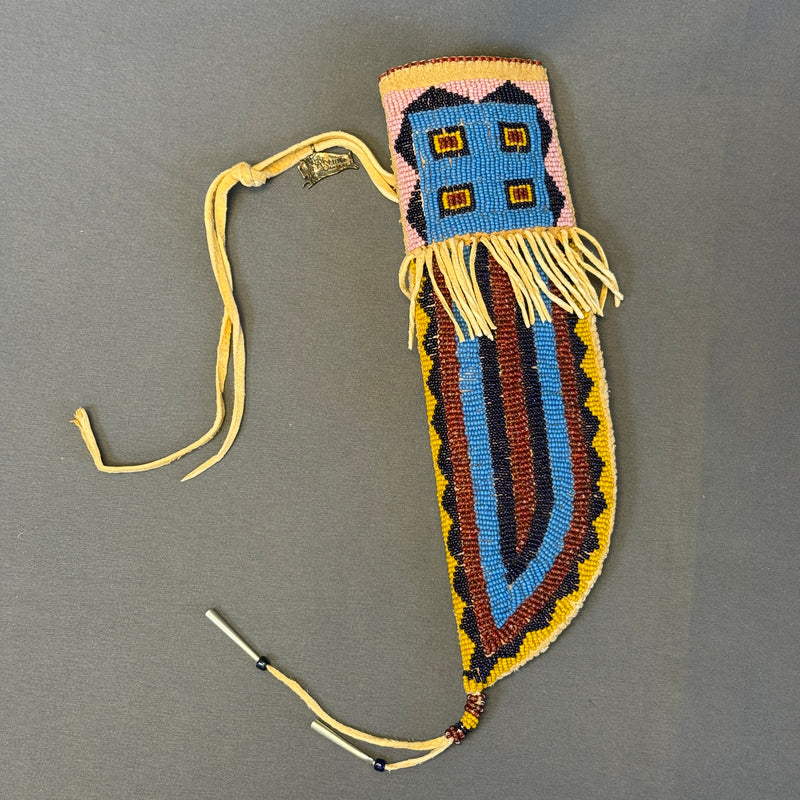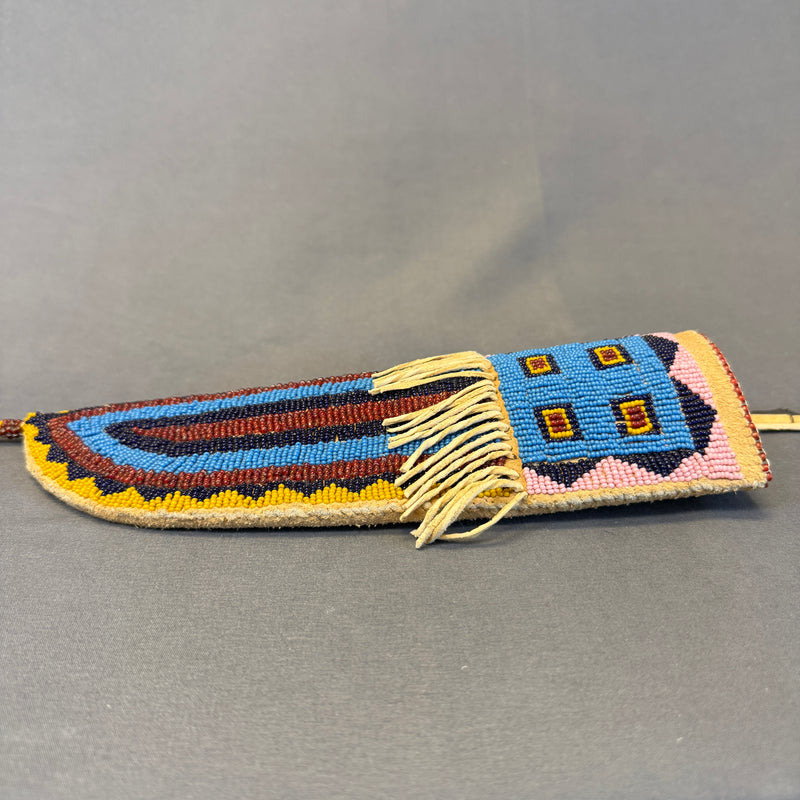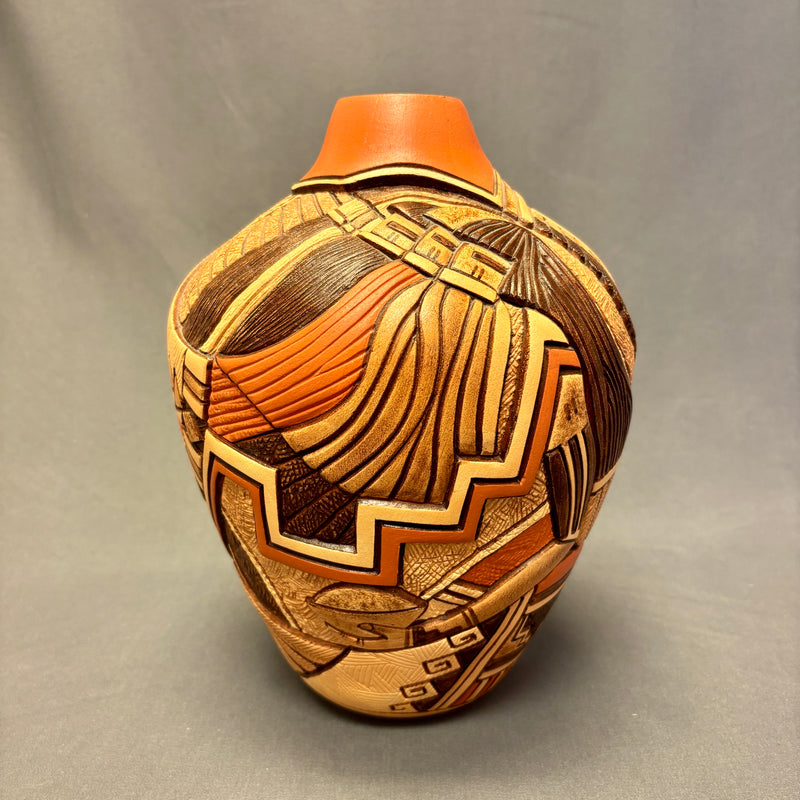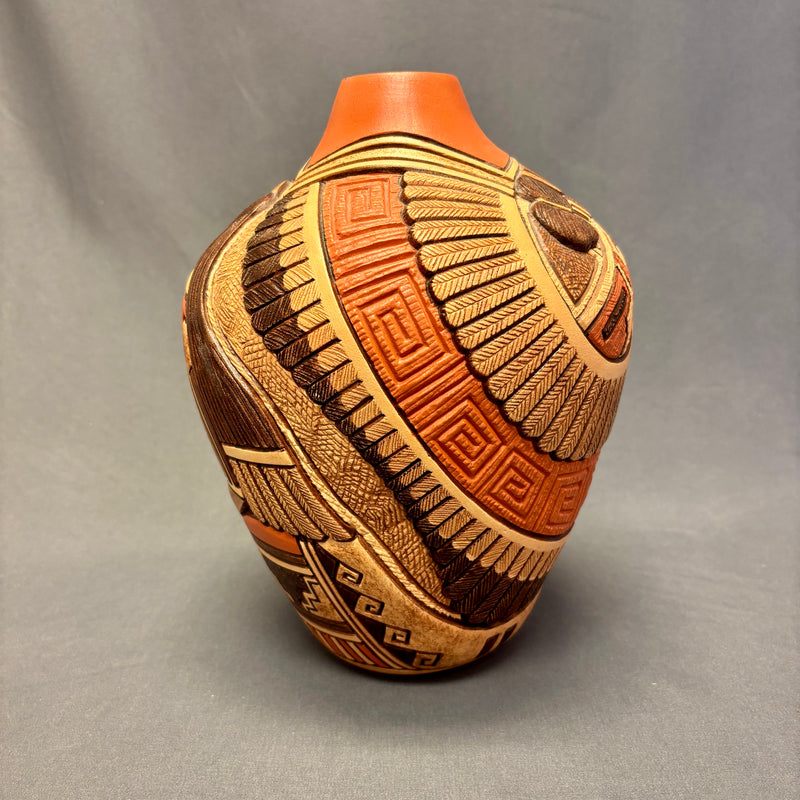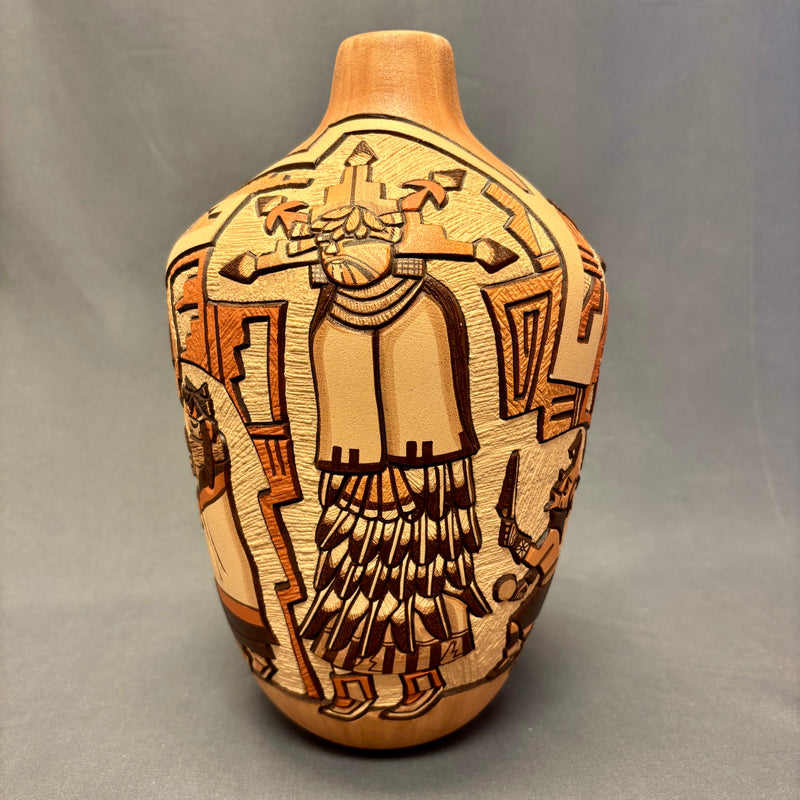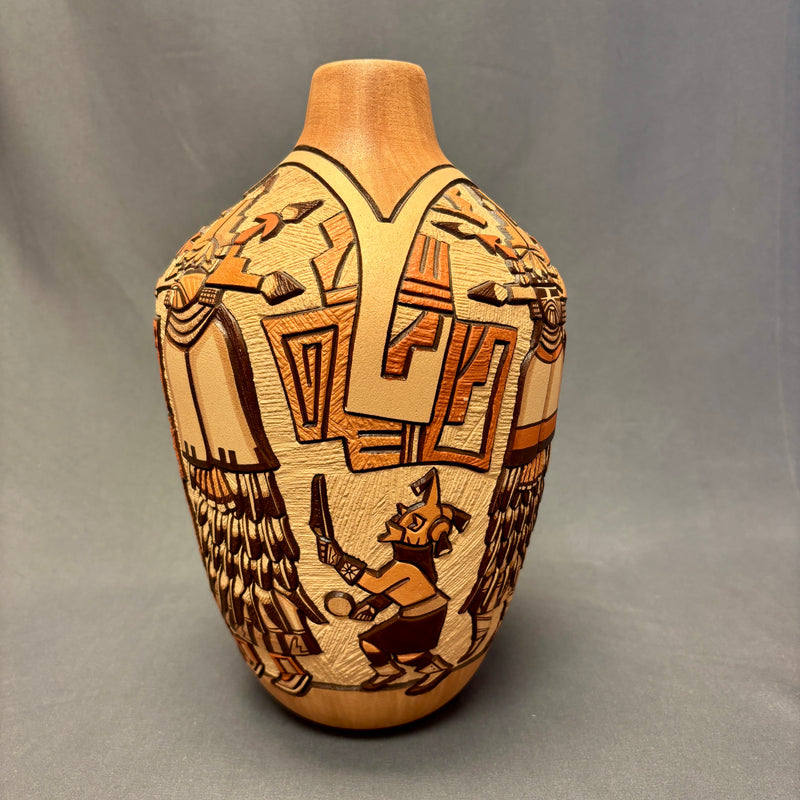


Antique Anishinaabe Beaded Bandolier Bag - late 19th century (GM233)
This fantastic, antique Anishinaabe bandolier bag is not only a work of art, it's also a piece of history! Made in the late 1880s, the cotton material of the bag is overlaid with black velvet fabric, pink silk ribbon, and gorgeous loomed Venetian glass beads in a floral pattern. The strap has a loomed fringe with handmade wool pompoms. The bottom of the bag has loops of large, glass beads and wool pompoms. Incredible!
DETAILS
Size: 45 1/2" hanging length to bottom of fringe, strap is 7 1/4" wide, body of bag is approximately 20" long x 17 1/2" wide
Condition: antique, from a private collection, excellent condition for age - fabric is in excellent condition, small areas of loose or missing beadwork, some deterioration of silk ribbons
The Anishinaabe are a group of culturally related Indigenous peoples in the Great Lakes region of Canada and the United States. They include the Ojibwe (including Saulteaux and Oji-Cree), Odawa, Potawatomi, Mississaugas, Nipissing, and Algonquin peoples.
Bandolier bags are large, heavily beaded pouches with a slit at the top. They have a beaded strap worn diagonally over the shoulder, thus resting the bag at hip level. The design is created using glass beads, a European trade good that replaced the traditional porcupine quills. The bags themselves are typically constructed from trade cloth, such as cotton, wool, velvet, or leather.
The Great Lakes Native American beaded bandolier bag was copied from those used by European soldiers to carry cartridges for their rifles. Early bags did not have a pocket, but were solely for decoration. Beaded bandolier bags were produced mainly from the latter half of the 19th century through the first half of the 20th century, but they continue to be made today. The floral design of the bandolier bag is typical of Great Lakes Native American work. The design first appeared around 1800 and by 1900 had become the dominant pattern in the area. Bandolier bags are constructed and beaded by women, though they are used primarily to complete the ceremonial outfits worn by men. There are, however, examples of older women wearing them in photographs. Sometimes more than one bag is worn. Bandolier bags are considered objects of prestige within the tribes that produce them.
Techniques of Beadwork
The beaded designs on bandolier bags are created through a variety of techniques, such as loom-beading and spot-stitching. Loom-beading uses a wooden loom; the bead designs are created using techniques similar to weaving textiles on a loom.
Spot-stitching was first developed through the introduction of seed beads. Spot-stitching means that beads are strung onto one thread and laid in place. The beads are then tacked down with an additional piece of thread at “spots” of three or four beads. Large areas could be filled quickly using this method, and the seed beads made it easier to create curvilinear designs. The beaded design is sewn onto a separate piece of cloth, which is then attached to the actual bag and shoulder straps.
GM233
This fantastic, antique Anishinaabe bandolier bag is not only a work of art, it's also a piece of history! Made in the late 1880s, the cotton material of the bag is overlaid with black velvet fabric, pink silk ribbon, and gorgeous loomed Venetian glass beads in a floral pattern. The strap has a loomed fringe with handmade wool pompoms. The bottom of the bag has loops of large, glass beads and wool pompoms. Incredible!
DETAILS
Size: 45 1/2" hanging length to bottom of fringe, strap is 7 1/4" wide, body of bag is approximately 20" long x 17 1/2" wide
Condition: antique, from a private collection, excellent condition for age - fabric is in excellent condition, small areas of loose or missing beadwork, some deterioration of silk ribbons
The Anishinaabe are a group of culturally related Indigenous peoples in the Great Lakes region of Canada and the United States. They include the Ojibwe (including Saulteaux and Oji-Cree), Odawa, Potawatomi, Mississaugas, Nipissing, and Algonquin peoples.
Bandolier bags are large, heavily beaded pouches with a slit at the top. They have a beaded strap worn diagonally over the shoulder, thus resting the bag at hip level. The design is created using glass beads, a European trade good that replaced the traditional porcupine quills. The bags themselves are typically constructed from trade cloth, such as cotton, wool, velvet, or leather.
The Great Lakes Native American beaded bandolier bag was copied from those used by European soldiers to carry cartridges for their rifles. Early bags did not have a pocket, but were solely for decoration. Beaded bandolier bags were produced mainly from the latter half of the 19th century through the first half of the 20th century, but they continue to be made today. The floral design of the bandolier bag is typical of Great Lakes Native American work. The design first appeared around 1800 and by 1900 had become the dominant pattern in the area. Bandolier bags are constructed and beaded by women, though they are used primarily to complete the ceremonial outfits worn by men. There are, however, examples of older women wearing them in photographs. Sometimes more than one bag is worn. Bandolier bags are considered objects of prestige within the tribes that produce them.
Techniques of Beadwork
The beaded designs on bandolier bags are created through a variety of techniques, such as loom-beading and spot-stitching. Loom-beading uses a wooden loom; the bead designs are created using techniques similar to weaving textiles on a loom.
Spot-stitching was first developed through the introduction of seed beads. Spot-stitching means that beads are strung onto one thread and laid in place. The beads are then tacked down with an additional piece of thread at “spots” of three or four beads. Large areas could be filled quickly using this method, and the seed beads made it easier to create curvilinear designs. The beaded design is sewn onto a separate piece of cloth, which is then attached to the actual bag and shoulder straps.
GM233
SHIPPING: We will ship within five business days of an order being placed. Shipping costs are the responsibility of the buyer. Unless otherwise specified, we will carefully pack and ship with insurance included in the shipping price. For fragile items, we double-box. Depending on customers preference the package will go USPS, FedEx, or UPS. If an item arrives at your location with damage, please contact us immediately and provide us with photographs and a description of the damage so we can file an insurance claim with the shipper.
Sorry, but we won’t ship to Post Office boxes. If you want shipment to a country other than the United States, contact us so we can provide an additional cost of international shipping and tariff fees that will be paid by the buyer. For all shipments, we will provide you with a shipping tracking number, so you can track and manage your delivery.
RETURNS: We have spent countless hours choosing the very best arts and we want you to enjoy your selection. Carefully look at the items offered, and if you have questions, or if you want additional photographs, please let us know before purchasing. If the item doesn’t meet your satisfaction, you can return it to us for a full refund, excluding shipping charges. We will accept returns within 15 business days of our original shipment date.
Should you feel the need to return an item, you are responsible for return packing, return postage, and return insurance. For return of pottery and art, packing must be done by the shipping company for insurance purposes. For all other items, packing should be similar to what was used by us to send it to you.
Upon receipt of your return, we will refund your original purchase price less shipping charges through your PayPal account within 7 business days. If the returned item is damaged (different than when it originally left our location), we will provide photographic documentation to you and expect you to file an insurance claim with the shipper. As these are unique one-of-a-kind pieces of art, damage to them renders them valueless to anyone. Thank you for helping to preserve these wonderful pieces of art.
PRIVACY: We will never sell or share your email address with anyone. We consider you a part of our gallery community and value your feedback.
PAYMENT: You can purchase by clicking the Add to Cart button, or feel free to call the gallery personally for assistance. Major credit and debit cards, MasterCard, Visa, American Express, and Discover, are accepted. Sadly, we can’t take checks.